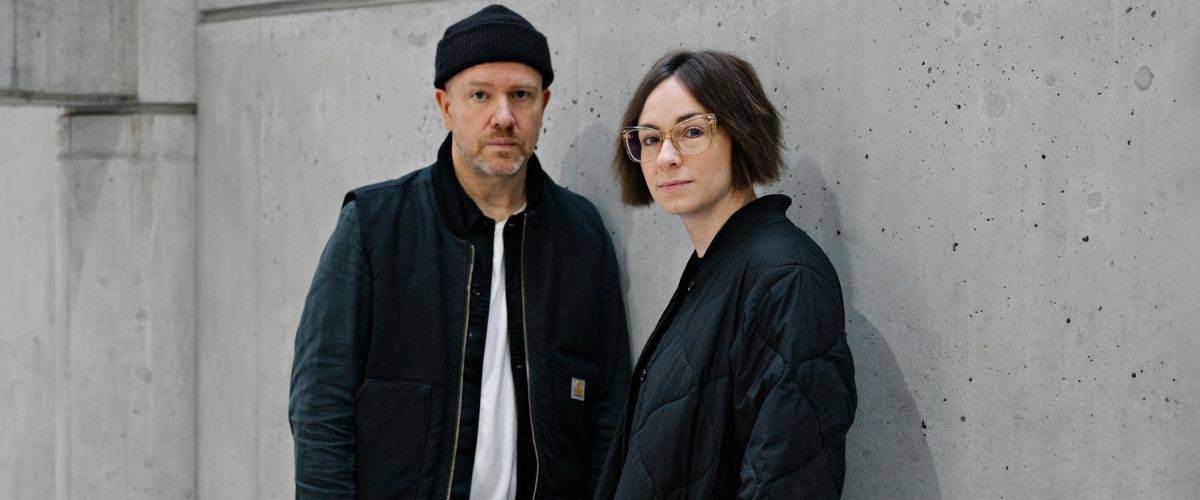
In the weeks following its debut at Langara College, How to Make a Monster lingered less like a traditional exhibition and more like a feeling audiences carried with them long after leaving the space. Created by Vancouver-based duo The Automatic Message, the multi-channel installation invited visitors into an internal landscape shaped by memory, pressure, and the quiet, often critical voices that influence how we see ourselves.
Presented as part of Langara’s 2026 Artists in Residence Program, the work transformed a public-facing environment into something far more introspective — an immersive, seven-screen experience that blurred the line between personal reflection and shared human experience.
A concept years in the making, finally realized
Although How to Make a Monster only recently came to life, the concept itself had been forming for years.
“We first began developing this idea about 16 years ago,” the artists shared. “When it resurfaced during the residency, everything shifted. It felt immediately compelling — especially knowing the work would be experienced in a high-traffic public space.”
That sense of universality became central to the project. Rather than creating something niche or abstract for a limited audience, the intention was to tap into something widely felt but rarely visualized: the internal critic.
For Tanya, that idea traced back to a specific memory. “I remember being alone in my bedroom but feeling like I was being watched,” she explained. “Over time, I started to understand that there was this inner ‘jury’ commenting on what I was doing or thinking.”
Turning internal dialogue into something visible
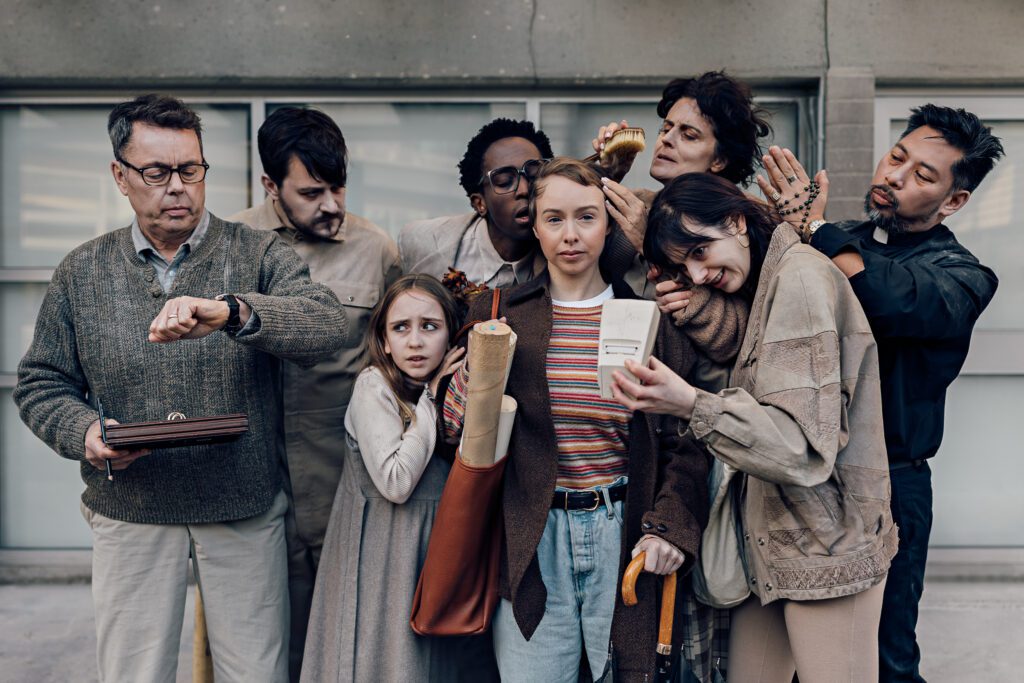
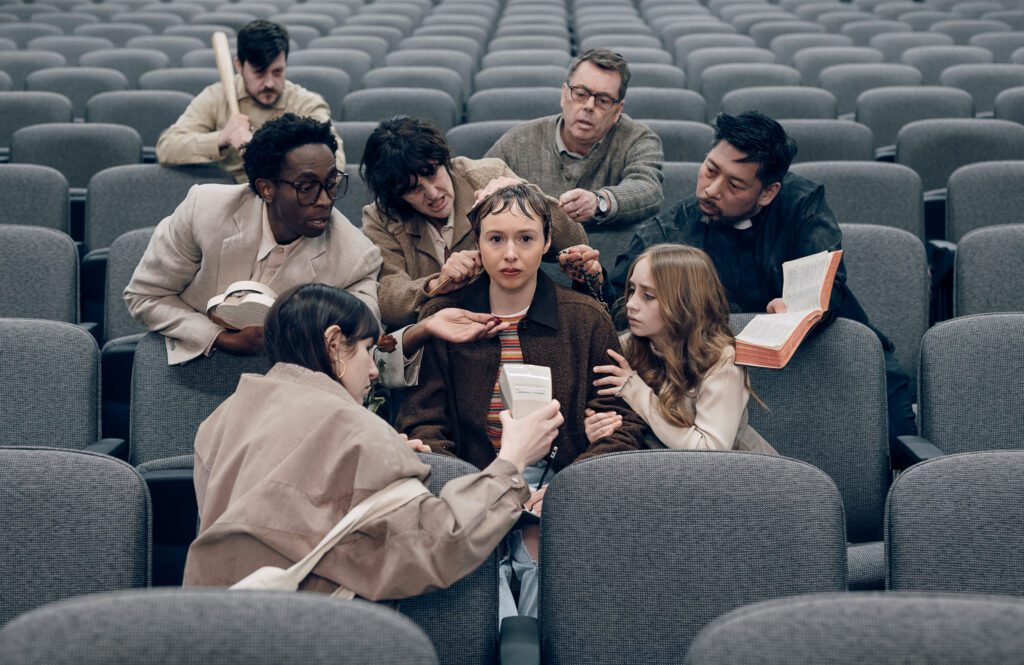
At the core of the installation was the decision to personify these internal voices as a “jury” — a collection of characters representing everything from parental expectations and social pressure to more abstract ideals of perfection.
“The voices shift depending on what’s going on in our lives,” the duo explained. “Some feel familiar, like things we’ve absorbed from people close to us. Others are more abstract — like this idea of a perfect life or how things ‘should’ be.”
By giving each of these voices its own presence within the installation, the work transformed something intangible into something spatial and immediate. Viewers weren’t just observing the internal dialogue — they were placed inside it.
An immersive format that mirrored the mind
Unlike traditional single-screen works, How to Make a Monster unfolded across seven screens arranged in a heptagonal configuration, with each channel contributing to a layered, shifting narrative.
The decision to expand into a multi-channel format came from earlier experiments in immersive storytelling. “Our last installation used four screens, and we loved building a world that way,” they noted. “With this project, it became clear that giving each jury member their own screen would make the experience more powerful.”
The result was a fully spatial experience, supported by a carefully constructed soundscape that moved with the visuals. However, the format also introduced new challenges.
“We had to constantly imagine how each screen would interact with the others,” they said. “It’s not just about what’s happening in one frame — it’s about how everything exists together.”
Drawing from personal experience to shape the narrative
While the themes of the installation felt universal, many of the moments within it were deeply personal.
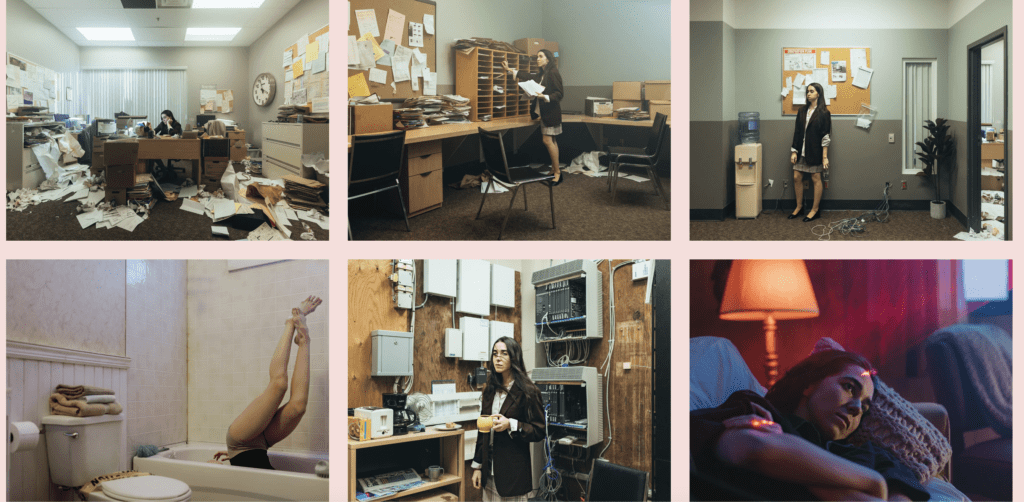
Trevor pointed to one scene in particular, inspired by a real-life experience during a job interview. “I had gone through multiple rounds and was feeling confident, but I was also exhausted,” he shared. “When the final interview came, I struggled to focus the way I wanted to. I didn’t get the job, and I remember feeling really disappointed in myself — the jury was definitely out that day.”
Moments like this grounded the work, allowing audiences to recognize their own experiences within the narrative. Rather than presenting a fixed story, the installation created space for interpretation and emotional connection.
A shared experience shaped by audience reaction
One of the most surprising takeaways for the artists came from how closely audience interpretations aligned with their intentions.
“You never know when you’re editing something this abstract whether it will land,” they said. “But people were incredibly perceptive — a lot of viewers described exactly what we were trying to communicate.”
That response reinforced the idea that the internal critic is not an isolated experience. Instead, it’s something deeply shared, shaped by social environments, media, and the expectations we absorb over time.
“There’s a high level of this being socially constructed,” they noted. “Even when you understand that, it’s still easy to feel like you’re not good enough.”
Collaboration, constraints, and creative problem-solving
The project also unfolded within a compressed timeline, requiring the artists to write, film, and edit the entire installation within a matter of months.
The technical demands were significant, particularly in post-production. “Editing seven channels of video while also composing the score was a major challenge,” Trevor explained.
At the same time, the physical exhibition space introduced unexpected constraints. Bright, open architecture meant traditional projection methods were not viable, leading to a last-minute shift toward television displays.
“We only had access to the screens shortly before opening,” they shared. “A lot of adjustments had to be made in the final 24 hours — moving scenes between channels, reworking interactions between characters. It was intense, but we got there.”
Support from Langara’s faculty and the involvement of students throughout the process played a key role in navigating these challenges, adding another layer of collaboration to the project.
Looking beyond the installation
As How to Make a Monster concluded its run, the artists reflected on what they would carry forward into future work.
“We’ve realized how much we love working with actors,” they said. “There’s something about improvisation and performance that brings a different level of depth to the work.”
That interest builds on earlier projects, including EMDR, a four-channel spatial cinematic piece exploring memory, trauma, and recovery through the lens of Eye Movement Desensitization and Reprocessing. Featuring dance artist Daria Mikhaylyuk as both lead performer and movement choreographer, the work blurred the boundaries between therapy, storytelling, and immersive art.
Together, these projects signal a continued interest in exploring the psychological landscape through audiovisual form — work that sits somewhere between film, installation, and emotional experience.
What remains after the experience ends
If there was a single takeaway the artists hoped audiences would leave with, it was not a definitive answer, but a shift in perspective.
“Mostly, we hope people leave feeling a bit more patient — with others, and with themselves,” they shared.
It’s a quiet sentiment, but one that reflects the core of the project. How to Make a Monster was never about eliminating the internal critic entirely. Instead, it offered a way to recognize it, understand it, and perhaps, over time, soften its voice.
And long after the screens went dark, that idea continues to resonate.
Browse more arts & culture dates here.